Breaking bread


To Break Bread is to engage in a comfortable, friendly interaction. Originally, the term was literal, meaning that a loaf of bread would be broken to share and eat, a casual meal among associates. Today, the term is used to describe a social interaction where something is shared. This could be food, money, commodities, assets, or other various items.
“At Aspire Happyness,
We know that true health and happyness are possibilities.
We see the world living in balance and all its inhabitants synchronously
giving and serving each other.
Provide people with the necessary assistance to achieve their goals of
living a great quality of life”
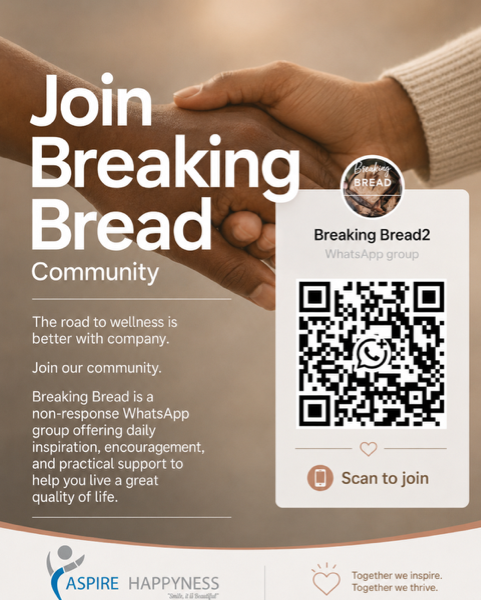
Breaking Bread is platform we use to provide people with the necessary assistance to achieve their goals of living a great quality of life.
This WhatsApp group gives you direct information from Dr Travis on how to navigate a health happy lifestyle!
It is a non-response group, so you will not get bombarded with other people’s opinions. It is simply information from Dr Travis and you are allowed to respond directly to him!

New addition to the office - a breast feeding nook.

Trust you had a successful week
The great argument of diets and eating plans is all too confusing. We abide by simple rules & they are super effective and non complicated:
1) Balance nutritional plan
2) Whole Foods
3) Raw as much as possible
4) rule of hand
5) detox at least 3 times per year
6) 5 and 2 rule
7) everything in moderation including moderation
Happy Eating
Health research has shown that 6 factors promote great health and optimal function:
1) great nutritional plan (not diets!)
2) being well hydrated. Make sure your urine is always clear and you avoiding diuretics (coffee, tea, soft drinks, salt, smoking) as much as possible
3) great quality sleep
4) consistent and regular movement of the body - diversely and dynamically
5) 30 minutes of stillness / quiet time every day (preferably eyes closed but wide awake)
6) positive neurochemistry
We certainly add chiropractic onto that list for the reason that Chiropractic corrects the brains control of the mechanics of the body...
So what we propose is that you make a decision where you need to improve; gain knowledge in that specific area (send me a message and I will direct you specifically) and implement change for 3 to 6 months to see the progress!
Good luck.
So commonly we understand that the issues we have in our body are related to our bad habits!
I had a patient today who said he wished to give up smoking but he cannot.
This brings to the conversation - "can old dogs learn new tricks?"
Neuroplasticity is the brains ability to rewire itself based on the stimulus or input recieved. That which we do repetitively we will hard wire into neural habit; become automatic. So if we wish to change something we need to change the hardwiring.
The 21 days to break a habit does not apply here. What applies is:
1) time - how long did it take you to set the habit this is how long it will take you to set the new habit
2) effort - how intense did you set the habit; you may need to practice something everyday; many times a day to change the habit
3) value - how important is it for you to change?
Many will not put the time, effort and value in place and for them it is impossible. How about for you?

Bought new plants for the office; #SpringReady. If you have any thoughts for our garden please let me know...we looking to create a beautiful, relaxed sanctuary of healing

Saturday - Taught scouts how to juggle; what cool tricks do you know?
I often get asked:
1) does clicking your knuckles cause arthritis?
2) if so doesn't clicking the neck cause arthritis?
Answers:
- adjusting a part of the spine / body is for the purpose of restoring connection to a part of the body.
- clicking a part of the spine / body randomly will create a interference or disconnect in connection to a part of the body
- I will adjust specifically and only when needed
- a person will click randomly and frequently
- at most I will adjust someone daily for a few days in a row; most people click something many times per day.
- one of the long term consequences of interference or disconnect in connection between the brain and the body is arthritis because the body has to protect the body. Arthritis is a protective mechanism.
- Therefore adjusting the body as I do prevents arthritis; clicking something will lead to arthrtis.
So direct answer:
1) does clicking your knuckles cause arthritis? Yes after some years
2) if so doesn't the chiropractor adjusting the neck cause arthritis? No if done with purpose.
Personalised Healthcare for Optimum Living
HomeAboutProductsWORK WITH USPRESSArticlesContactCHOOSE A DOCTORBUY DNA TESTHEALTHAND WELLNESSUINIQUELY TAILOREDTO dnalysis.co.za
If you have spare cash this is a great addition to the knowledge you have on yourself.
Links well with the book - Biology of Belief (Bruce Lipton)
Every year on my birthday I do as many pushups as my age...in one go. I have 1 and a half months to go until my birthday so I am training like mad.
Every day I do as many pushups until fatigue. Fatigue is when I lose form and do not do a push up correctly and then 3 times per week I do as many pushups as I can, rest and try a second, third and 4th set with rest in between.
The goal is to do 20 push ups on the 1st set and maintain that for 2nd, third and 4th set.
This morning I managed - 20 pushups on the 1st set; 19 on 2nd set; 13 on 3rd set and 9 on 4th set.
This means my endurance needs work.
What is your current challenge?
From Wednesday's post I got great questions about how to change your state. The simple answer is:
- Physically this is done through stillness practices like meditation and breathing
- Emotionally this is done through conscious emotional processing
- Mentally this is done through affirmations / scriptures and the like
- Spiritually this is done through Faith in God (whoever this may be for you) [Psalm 46:10] “Be Still and know that I am God!”
This is the simple answer obviously you have to feel it which means get the shift in the neurochemistry that goes with this. I personally feel this the game…the hard part and takes the most training. Majority of the time you never get to shift the neurochemistry naturally and this is why people have to go to drugs and other addictions to get that shift.
If you can practice daily you will start to feel the shift occurring within 3 to 6 months…once you feel the shift you can start to reproduce it more regularly.
Have a great balanced WEEK and start your practice.

New product - a chair pouch for your baby. (Doll not included🧐) material swatch on the side. Pls let Phumzile know your orders.
The body has a sympathetic system - stressed system; and a parasympathetic system - relaxation system.
These two systems should work in unison to keep the body in balance... However from every day stress and compensation the body gets stuck either with:
1)engaged sympathetic and disengaged parasympathetic which initially is the stress state most of us have when dealing acutely with danger. However staying here permanently is where chronic-degenerative-exhausted diseases occur.
2) engaged parasympathetic and disengaged sympathetic which is an active healing crisis and healing state. However staying here permanently is where the hectic emotional conditions reside (depression et al). Sluggish energy and metabolism also results here.
3) disengaged sympathetic and parasympathetic which is where terminally ill and frail people are.
Living life in a very specific way allows you to maintain good balance. A question is where are you out of balance?
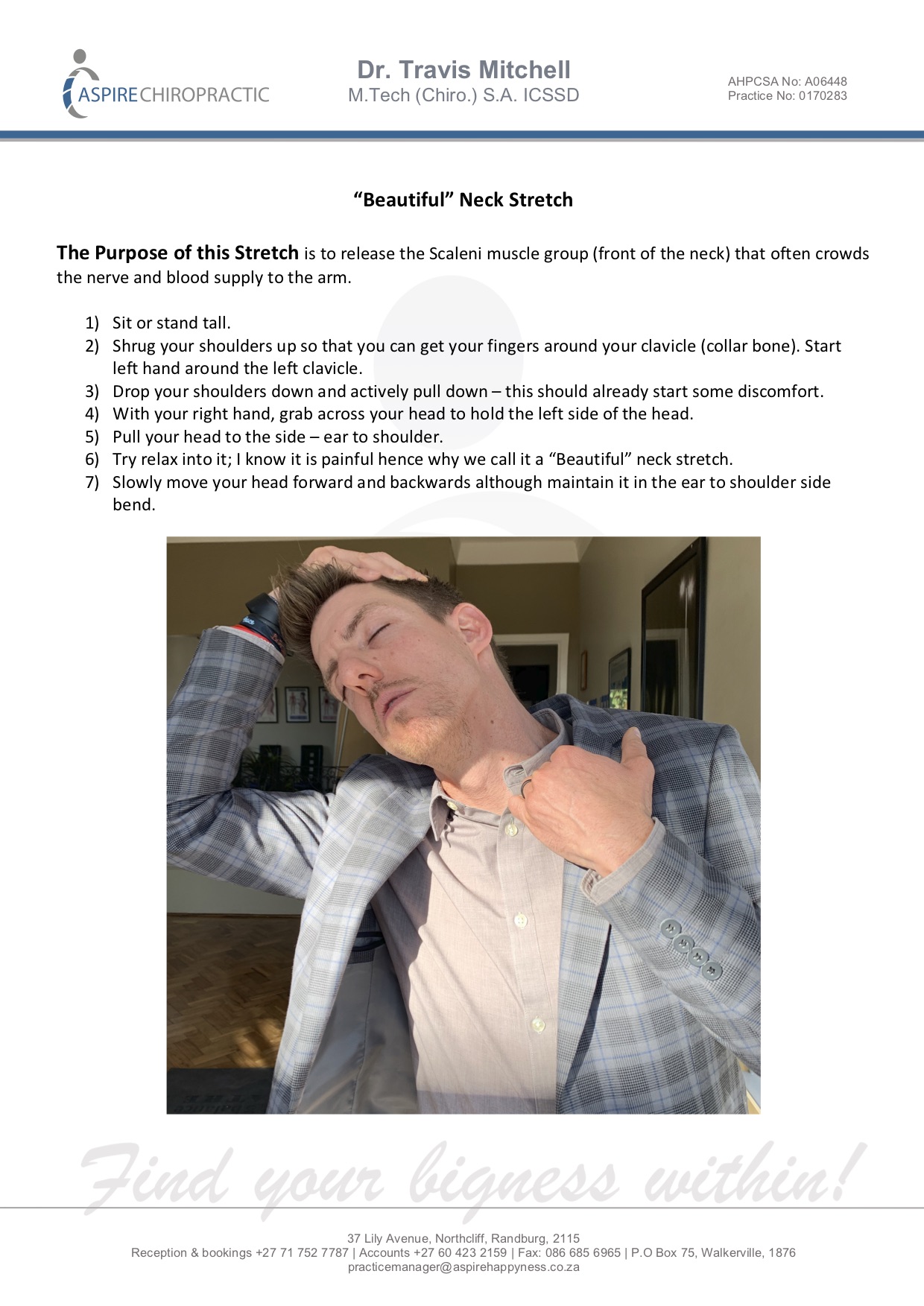
Beautiful Neck Stretch
Knowing what challenges your body allows you to make conscious decisions on how to do it differently!
So stay alert now. Adaptation is possible.
Spring is the start of something new; revitalize and refreshed. Plan 5 minutes everyday of some form of exercise...plank, push ups; squats or even to simply climb the stairs.
Go Spring!
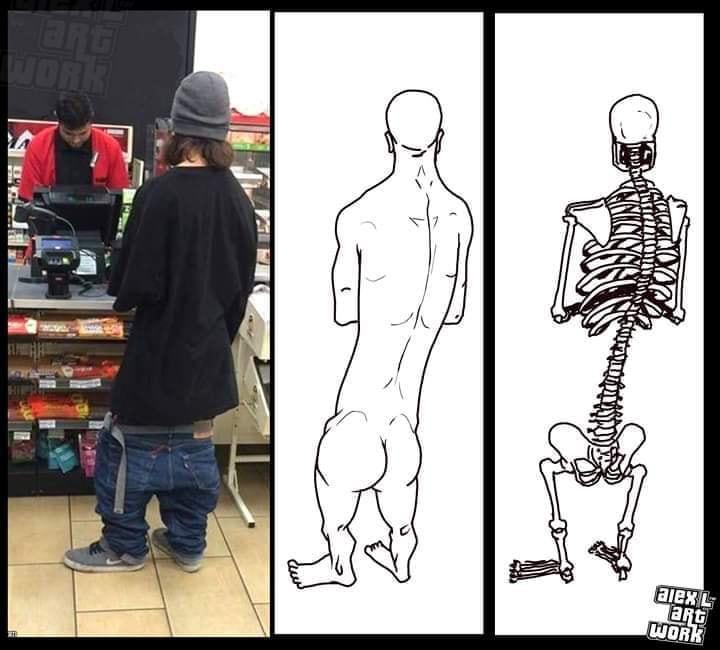
A Chiropractic Nightmare
10 warning signs of an unhealthy spine
https://www.aspirehappyness.co.za/blog/chiropractic/10-warning-signs-un…
Nice simple article to send to friends and family about Chiropractic!
Read the article on the website.
The body has the ability to adapt to the challenges you face however unless that is correctly engaged...the body will compensate instead.
Compensation will first occur in muscles; muscles will become either hypertonic (over engaged) or weak. Then tendons get involved and they become either contracted and short or overlong and lose stability.
As the body is forced to continue to compensate the joint capsule and ligaments get involved. They will either be contracted and restricted with adhesions or they become loose and lax.
This will cause first signs of damage into the joint surfaces. Generally cartilage / disc damage occurs first which is not seen on X-rays and this then progresses actually damaging joint surfaces. Arthritis is the result which is painless unless acidity creates pain and Chronic inflammation.
Because the joint surface are affected extra bone growth is the next compensatory mechanism. Now the body is attempting to fuse the unstable arthritic joint. The extra bone growth occurs to such an extent that it impacts nerve and blood vessel circulation. Finally the compensation affects the nerve and blood circulation enough that it is pinched or encroached and organ dysfunction and failure occurs.
This process occurs over time and is reversible to a point. How much compensation do you have?
When you receive an adjustment the brain has to respond to the adjustment. In doing so the brain will reorganize muscles, ligaments, tendons, circulation, organ function etc. based on where the adjustment was given.
With regards to responses we look at:
1) immediate response - this is the indication of how easy the body will change
2) delayed response - over a day or two; indicates the body’s ability or habit to change
3) restoring response - does the change hold or start to regress again? This indicates how quickly the habit will begin to change permanently.
For example - person gets an adjustment and leaves feeling better but a day later feels like they have been run over by a bus and is really inflamed. However 3 days later is feeling wonderful but only for the day and then returns back.
This means - able to create change but the body does not want to change and does not recognize the change as something positive. It will take sometime and effort for the correct habit to be put in place.
How do you respond to your adjustments?